Search

Where's your next trip?

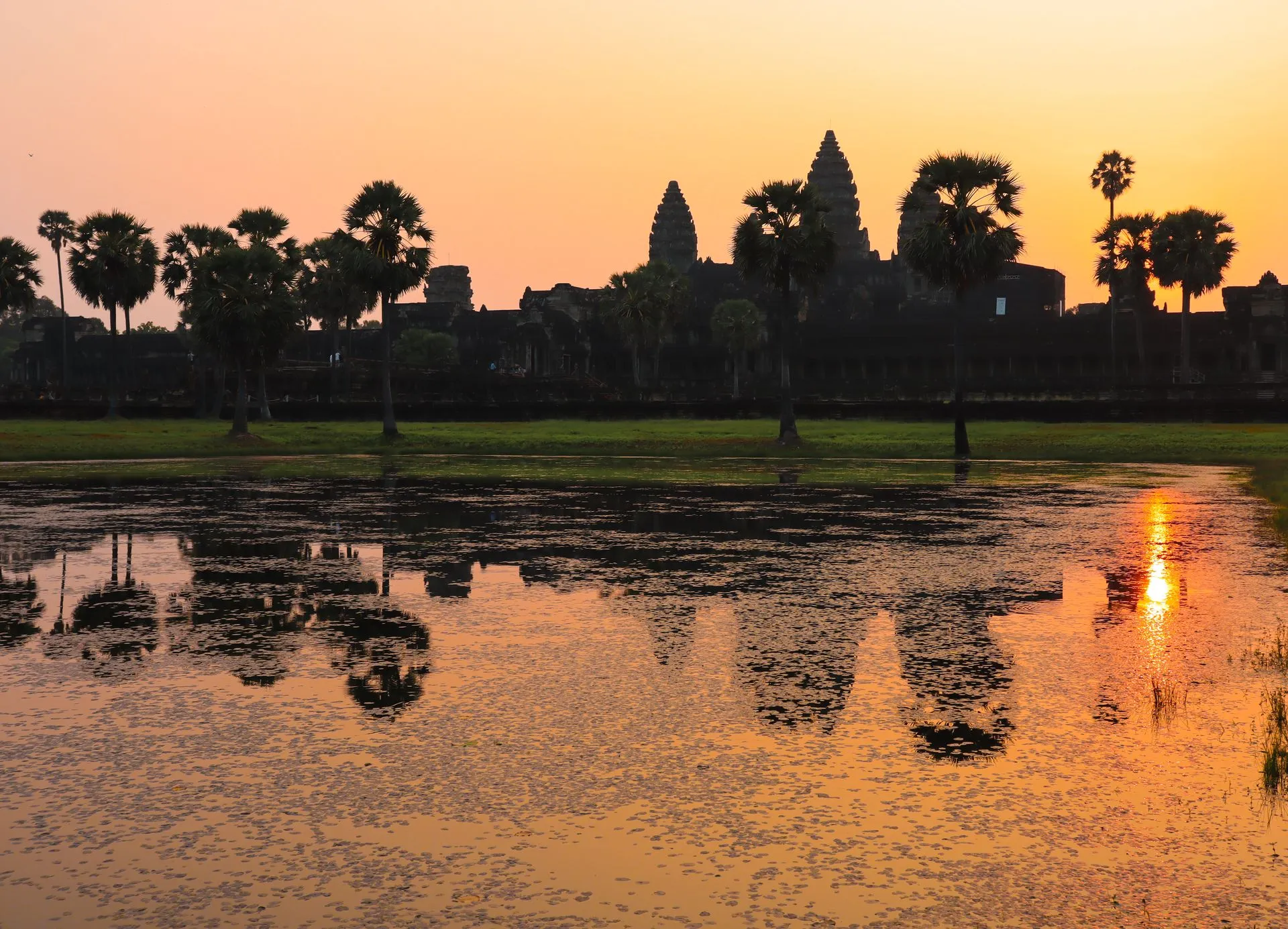
Cambodia, Angkor Wat temple complex at sunrise
HomeRoutesCambodiaThe Cambodia Route
Reiseroute

The Cambodia Route

4 Stops
Nov–Mar
Culture · History · Nature
E-visa
Visa (DE passport)
Nov–Mar
Best time
GMT+7
Time zone
KHR
Currency
Die Route

In April 2023 my partner and I checked another country off our bucket list: Cambodia, a country with a turbulent history, awe-inspiring temple complexes and paradise-like beaches that had drawn me in for a long time.

My trip started in Frankfurt, flying Qatar Airways via Doha and Bangkok to Siem Reap, for around €1,000 per person including luggage. From there we spent 1.5 weeks traveling through some of the country's most beautiful and fascinating places: the temples of Angkor Wat in Siem Reap, the vibrant capital Phnom Penh, the dreamy beaches of Koh Rong and the laid-back river town of Kampot, before my trip continued overland into Vietnam.

Cambodia deeply impressed me with its colors, its warmth and its diversity, and that's exactly what I want to tell you about in this guide: my honest experiences, favorite spots and the tips I wish I'd had before the trip myself.
Good to know
Angkor Wat and the surrounding temple complexes near Siem Reap rank among Asia's most significant cultural sites
Tonle Sap Lake with its floating villages dramatically changes size depending on the season
The capital Phnom Penh blends colonial architecture with a turbulent, openly confronted history
Island beaches near Sihanoukville and Koh Rong are still noticeably quieter than comparable destinations in Thailand
One of the more affordable countries to travel in Southeast Asia, especially away from the main attractions
Interactive Map

The Route on the Map

Stops

The Route in Detail

1
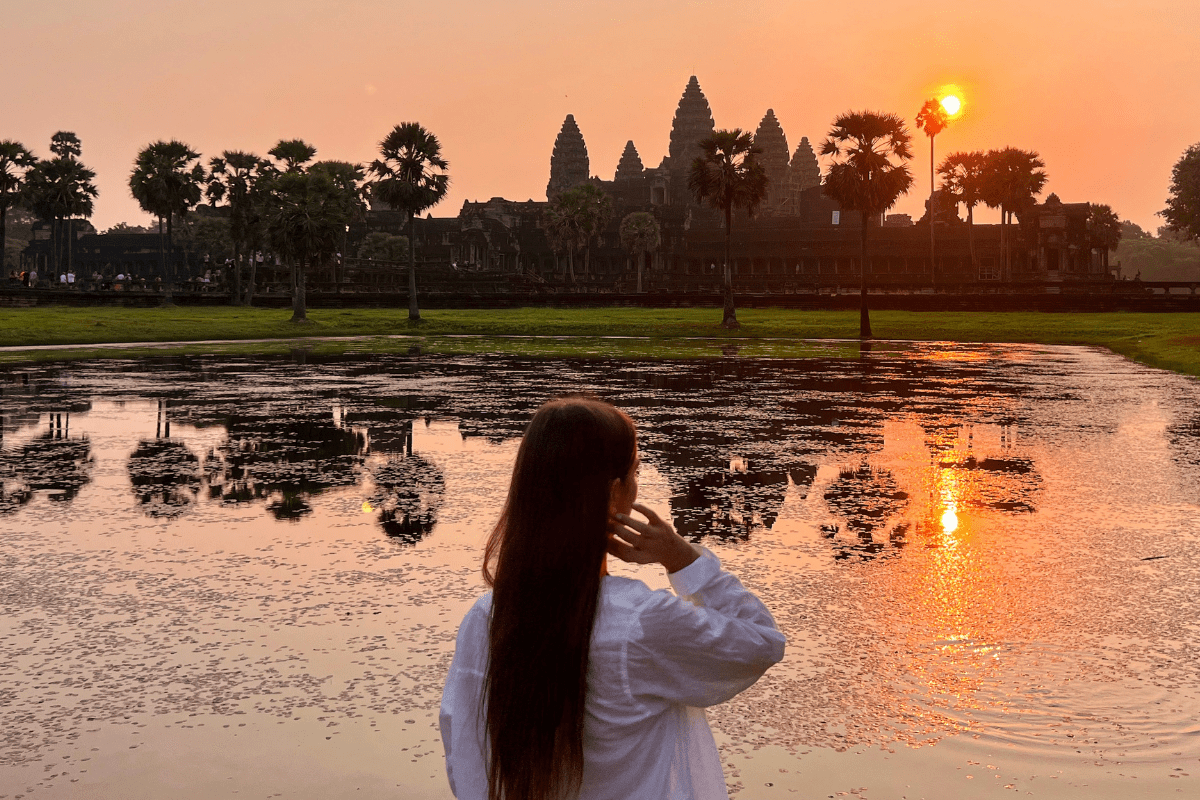
Isabel in front of Angkor Wat at sunrise, Siem Reap
Northwest
Siem Reap

Our trip to Cambodia began in Siem Reap, a city with a charm all its own. Gateway to the temples of Angkor, the largest temple complex in the world, plus a lively night market and restaurant scene around Pub Street.
Sunrise tour to Angkor Wat, Ta Prohm and BayonPub Street and Night MarketRoti as a sweet snack on the goAngkor National Museum for even more temple history
More aboutSiem Reap →
2
Phnom Penh, Cambodia
Capital
Phnom Penh

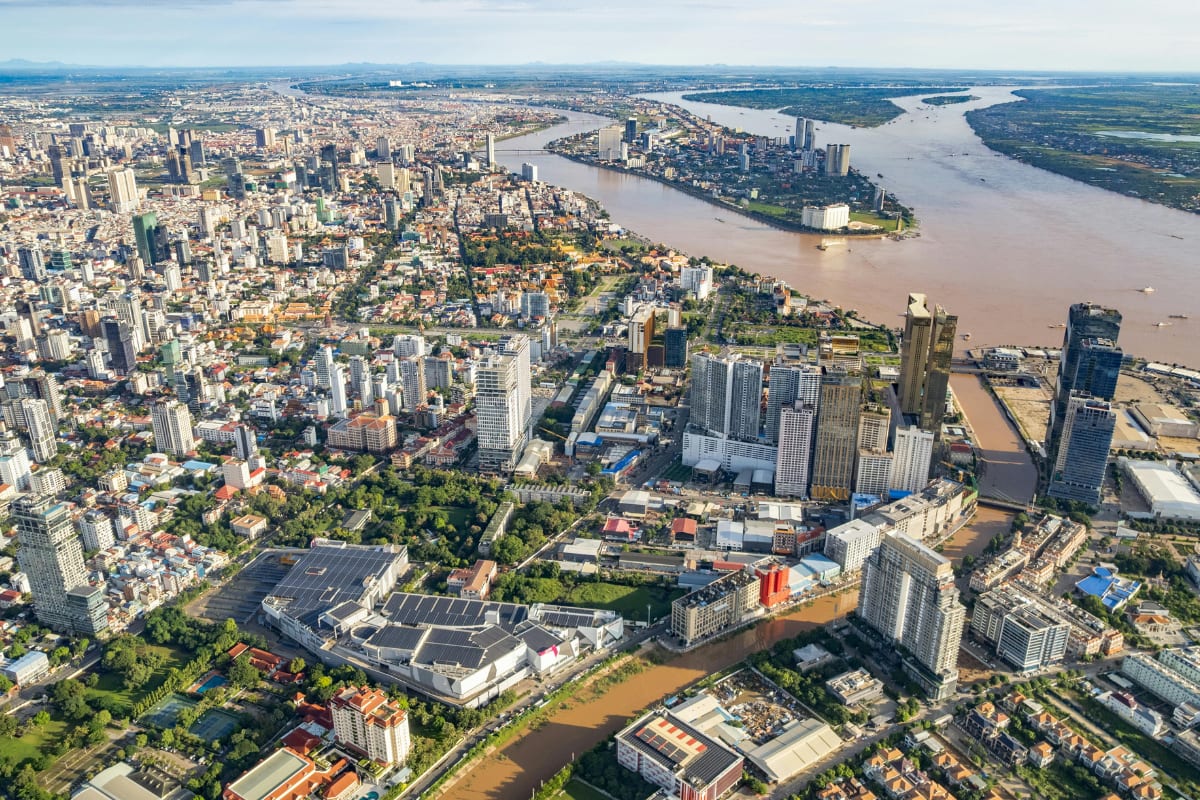
Phnom Penh is Cambodia's vibrant capital and also its largest city, located at the confluence of the Mekong, Tonle Sap and Bassac rivers. Its history goes back to the 14th century, and though founded as a small settlement, it was for centuries an important trading and cultural center and served as the capital of the Khmer Empire.
Tuol Sleng Genocide Museum (S-21)Royal Palace with the Silver PagodaWat Phnom and Wat Langka
More aboutPhnom Penh →
3
Koh Rong, Cambodia
Coast, Gulf of Thailand
Koh Rong

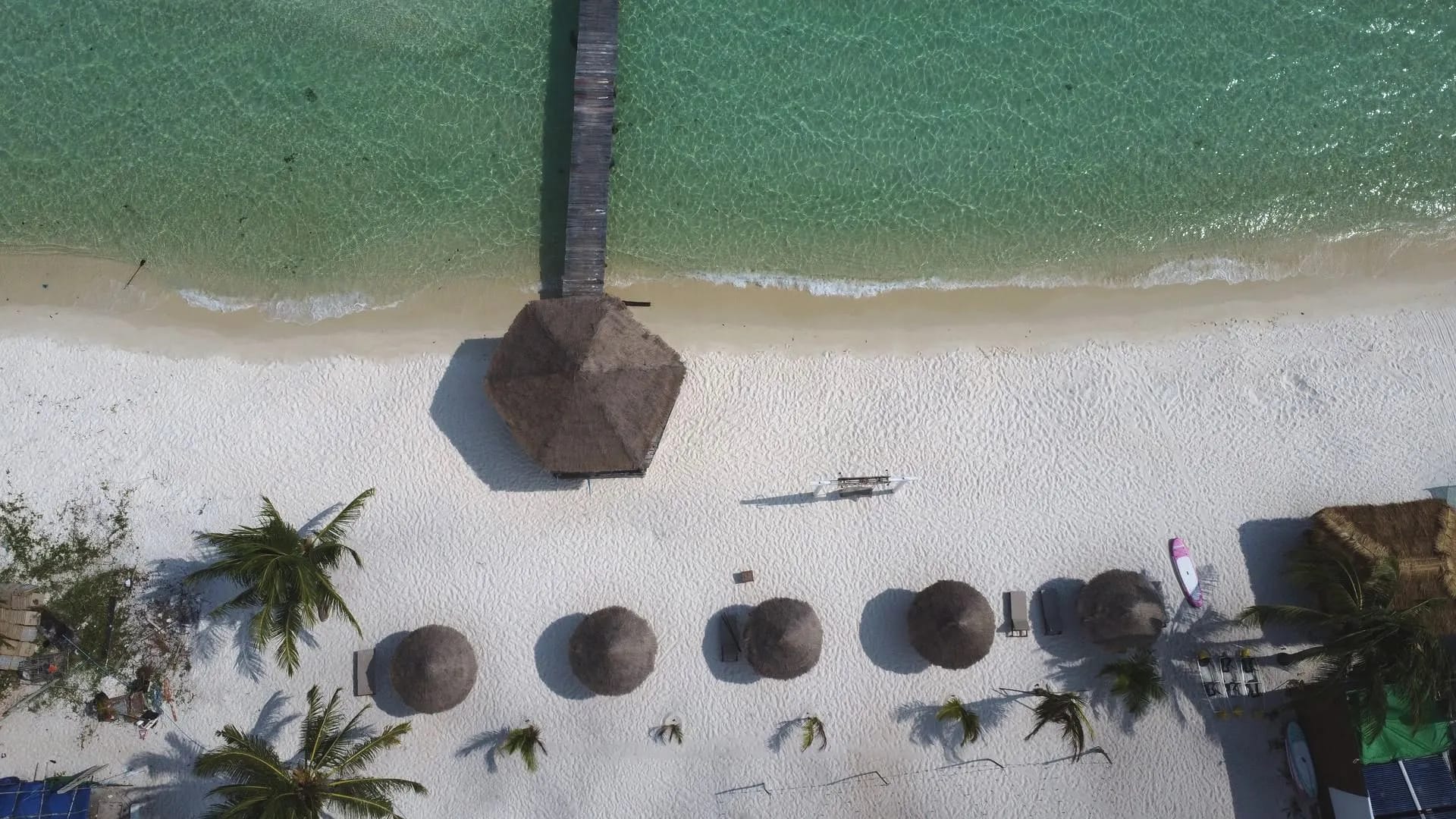
Koh Rong is a breathtaking island in Sihanoukville province, known for its dreamy beaches and crystal-clear water. A true paradise for anyone who loves beach life and wants peace away from the crowds. The island offers plenty: snorkeling and diving among colorful marine life, kayaking and relaxed walks along endless sandy beaches, or simply soaking up the sun. Koh Rong consists of two islands: the larger, livelier main island Koh Rong with lots of accommodation, restaurants and bars, and the smaller, quieter Koh Rong Samloem.
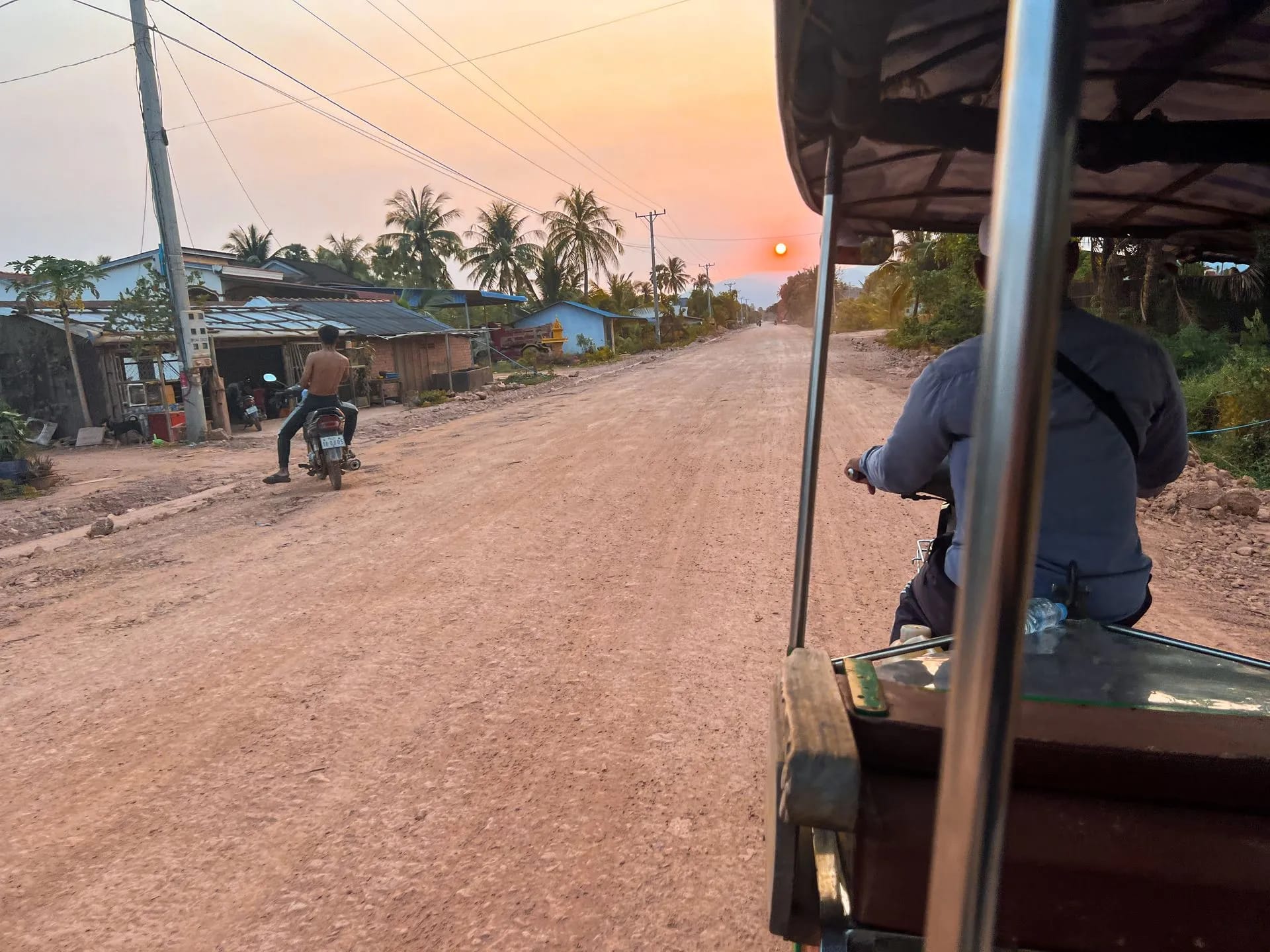
Golden Beach Resort right on a dream beachSnorkeling at Coral Garden and Long Set BeachDiving with sharks, rays and a sunken wreck7 km long Long Beach for sunsets
More aboutKoh Rong →
4
Kampot, Cambodia
South
Kampot

After Koh Rong our trip continued south to Kampot, a province known for its scenic beauty, picturesque river and impressive mountains. Kampot wasn't just the ideal stopover on the way to Vietnam for us, it was a place we absolutely wanted to experience, and we were especially curious about the world-famous pepper plantations. During our all-too-short stay, we quickly realized Kampot had so much more to offer than we expected. The charm of the small town, the relaxed atmosphere and outdoor activities like trekking, kayaking or river boat tours won us over.

La Plantation pepper farm with tastingKampot Night MarketBokor National Park nearbyBoTree Farm and the Kampot salt fields
More aboutKampot →
Everything You Need to Know

Practical Info

✈️
Getting there & transport

No direct flights from Germany, I flew Qatar Airways via Doha and Bangkok to Siem Reap, around 15 hours of pure flight time for about €1,000 per person including luggage. Within the country I traveled by minibus, booked through 12go.asia, affordable and mostly reliable.

Since 2024, the online registration "Cambodia e-arrival" is mandatory, at least seven days before entry. Visiting Angkor Wat in Siem Reap also requires an overnight stay, a same-day trip from a neighboring country isn't allowed. At the bus company you have to show your digital ticket on your phone to get the physical ticket.

🏨
Accommodation

Ranges from simple guesthouses from €8–15 to boutique hotels and resorts from €50–150. I personally paid between €56 (Kampot) and €140 (beachfront resort on Koh Rong) per night, usually including breakfast. Siem Reap and Phnom Penh have an especially wide selection across all price ranges.

🍜
Food & drink

Khmer cuisine is milder than Thai food, with dishes like amok (a curry dish) or Khmer soup. Don't drink the tap water, bottled water is available everywhere.

📱
SIM & internet

Right in the arrivals area of the airports you'll find counters for Smart Axiata, Metfone and Cellcard, buying a SIM is straightforward and you're online right away.

Smart Axiata offers around 30 GB for 15 days from about $5, Cellcard offers around 60 GB for $6 (or 100 GB for $10), and Metfone, at around $6 for 60 GB, often has the best coverage even in more rural regions.

🎒
Packing list

Light, breathable clothing, a rain jacket for the rainy season and sturdy shoes for temple visits belong in your bag. Covered shoulders and knees are required for Angkor Wat, a light scarf is easy to throw on.

Sunscreen, insect repellent and a refillable water bottle are essential in the heat. An adapter (Type A/C/G, 230V) and a power bank come in handy for long bus rides, since the power grid isn't always reliable outside the cities.

🚁
Drone rules

You generally don't need to register for private drone flights in Cambodia, but flying over the Angkor temple complex is only allowed with an official permit applied for in advance, without it you risk confiscation and fines.

For Siem Reap/Angkor Wat, several permits are needed at once, including from the Ministry of Culture and Fine Arts and the Apsara Authority, and the combined costs can run up to $1,000. Flying is also banned over the Royal Palace in Phnom Penh and near government buildings, military facilities and airports. Outside these sensitive areas, drone flying is usually fine, but it's still worth getting drone insurance and checking the current rules before your trip, since regulations can change.

Full drone guide for Cambodia →
💊
Health & safety

Recommended vaccinations: hepatitis A+B, typhoid, tetanus – at least 6 weeks before departure. Travel insurance including repatriation is strongly recommended.

Year-round malaria risk exists mainly in border regions with Thailand and Laos as well as in rainforest areas, while Phnom Penh, Angkor Wat and the major cities are considered malaria-free, prophylaxis may make sense depending on your route – best clarified individually with a travel medicine doctor. Vaccinations against Japanese encephalitis and rabies (stray dogs and monkeys aren't uncommon) can also be worthwhile depending on the length and route of your trip. Insect repellent additionally helps against dengue fever. Medical care in tourist areas is usually adequate, but more serious cases are often transferred to Bangkok.

🙏
Culture & etiquette

Cover shoulders and knees in temples, take off your shoes. The head is considered sacred and shouldn't be touched, and don't point your feet at people or Buddha statues.

The history of the Khmer Rouge era (1975–1979) is still very present in the country, a respectful approach to the topic is appreciated, for instance when visiting memorials like the Tuol Sleng Museum or the Killing Fields. The king and royal family are held in high esteem. The right hand or both hands are typically used for paying and handing over objects, and a smile and calm demeanor go over better than loud behavior in conflict situations.